High Performance Building Case Study: Ford Calumet Environmental Center
Nail-laminated timber project connects Big Marsh Park’s industrial past with local ecology
Project Overview
In 2021, the Ford Calumet Environmental Center opened in Chicago’s Southeast side. The LEED Silver building is located within Big Marsh Park, which is a part of the Chicago Park District’s largest reclamation projects.
Project Team
- Owner: Chicago Park District
- Architectural Design: Valerio Dewalt Train
- General Contractor: Chicago Commercial Construction
- Civil Engineering: Primera MEP Engineering: dbHMS
- Structural Engineering: Matrix Engineering
- Green Infrastructure: Biohabitats
Located within Big Marsh Park on Chicago’s Southeast side, the Ford Calumet Environmental Center celebrates the region’s environmental and cultural assets.
Big Marsh Park is a 300-acre natural and recreational space that has been damaged by more than a century of industrialization from nearby steel mills. Now, the park, opened in 2016, is one of Chicago Park District’s largest reclamation projects and home to a 40-acre bike park and walking trails.
The 9,300-square-foot LEED Silver project includes a bike repair area, nature exhibits, two classroom spaces, offices, restrooms, and storage spaces.
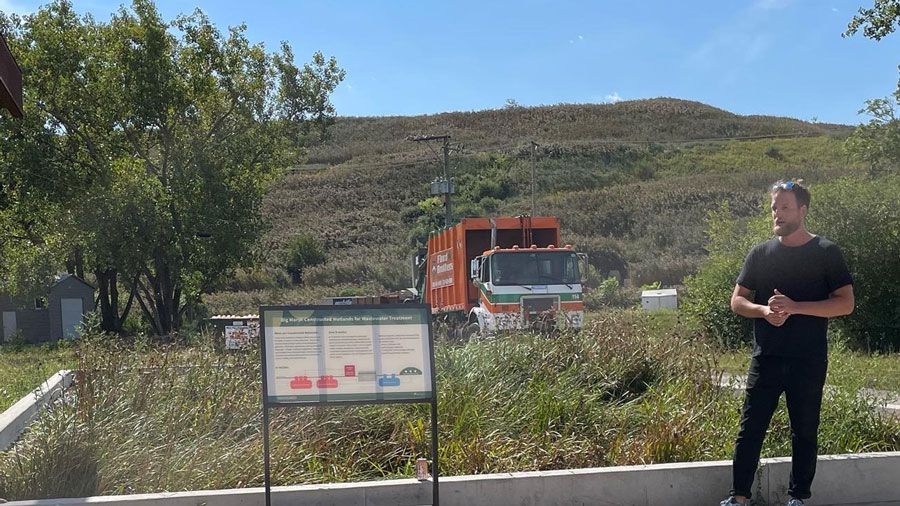
The center uses an on-site, constructed wastewater wetlands system, which uses the site’s wetland vegetation, soil, and other natural organisms to filter the building’s blackwater. This system, which isn’t connected to the City’s sewer system, is the first of its kind in Chicago and one of the first in Illinois.
A majority of the project was funded by a $3.7 million donation from Ford Motor Company, which owns a nearby assembly plant.
Spotlight on nail-laminated timber
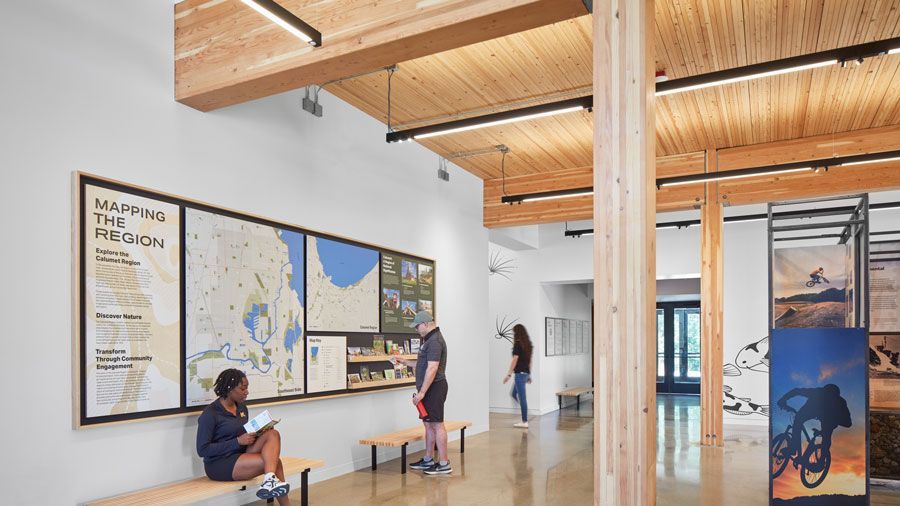
Nail-laminated timber (NLT) is a durable, low-carbon alternative to building materials like concrete and steel, which are carbon- intensive during production. This lightweight material is well-suited for large floors, walls, and ceilings. In addition, NLT is less expensive than other mass timber materials, like cross-laminated timber.
Cost Effective Sewer Solution
“One of the things that pushed us into doing a high performance building was the fact that we had to come up with a solution to sanitary waste,” said Joe Valerio, Principal at Valerio Dewalt Train.
The site is roughly two miles from any sanitary sewer system, so the project team had to think creatively about how to solve this issue. Initially, the team estimated that it would cost nearly one eighth of the project budget to build a connecting sewer line to the site.
That’s when Valerio Dewalt Train sought out ecological restoration company, Biohabitats to design Chicago’s first constructed wastewater wetlands system. The system treats black water on-site and releases the nearly-potable water back into Lake Calumet.
Matterials Marry industrial past with nature
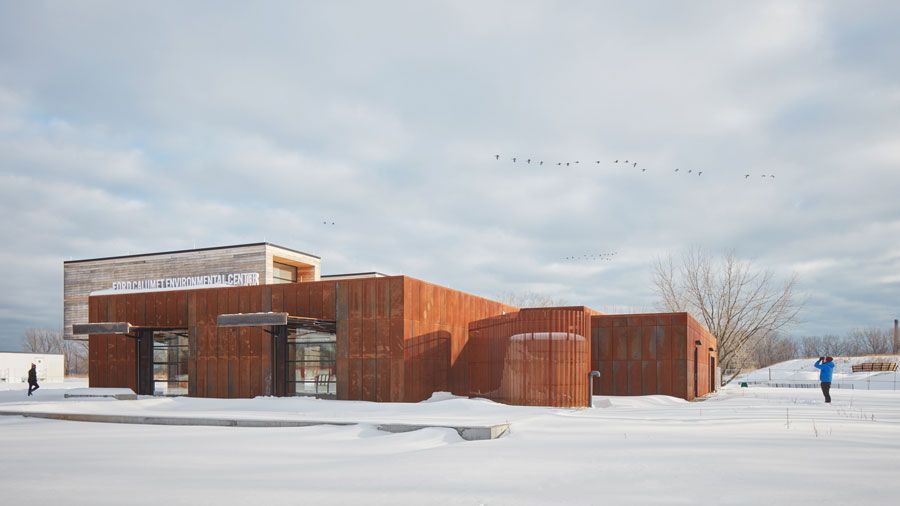
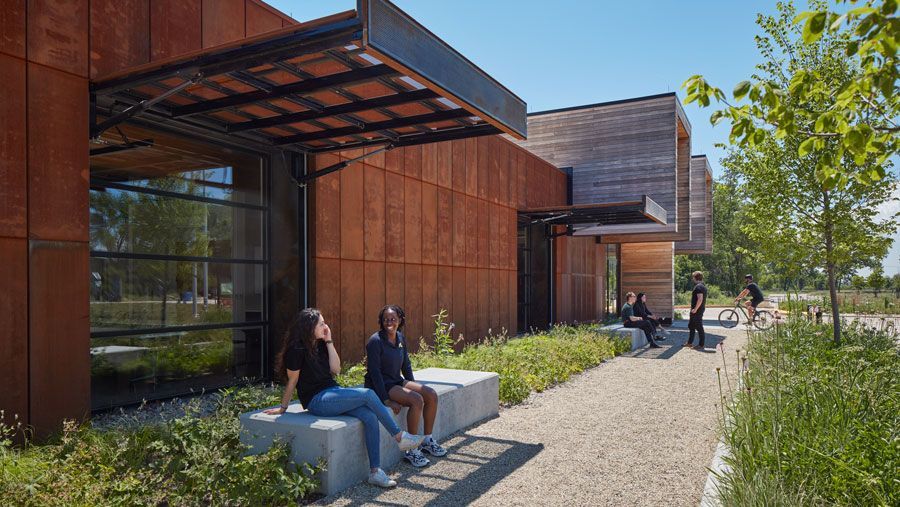
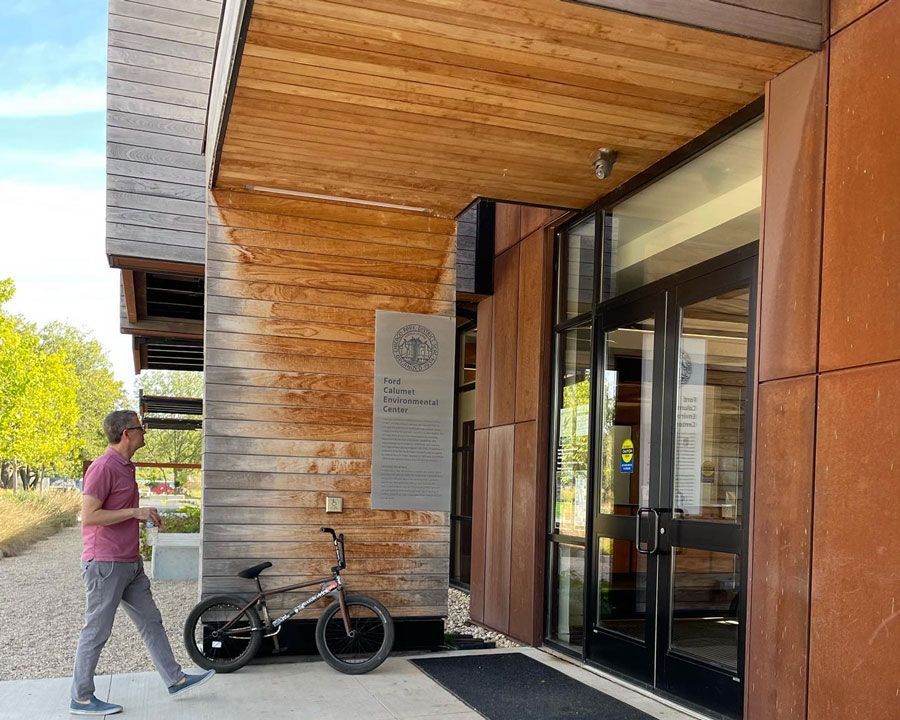
The building’s exterior is clad in a rain screen of weathered steel, which calls upon the site’s industrial past. In contrast, the interior structure is made of exposed nail-laminated timber, alluding to the project’s sense of ecological reclamation.
Exhibit connects past, present, and future
The building is home to an exhibit that tells the story of over industrialization; The display focuses on the park’s reclamation of natural habitats after decades of damage caused by nearby steel mills.
A building made with birds in mind
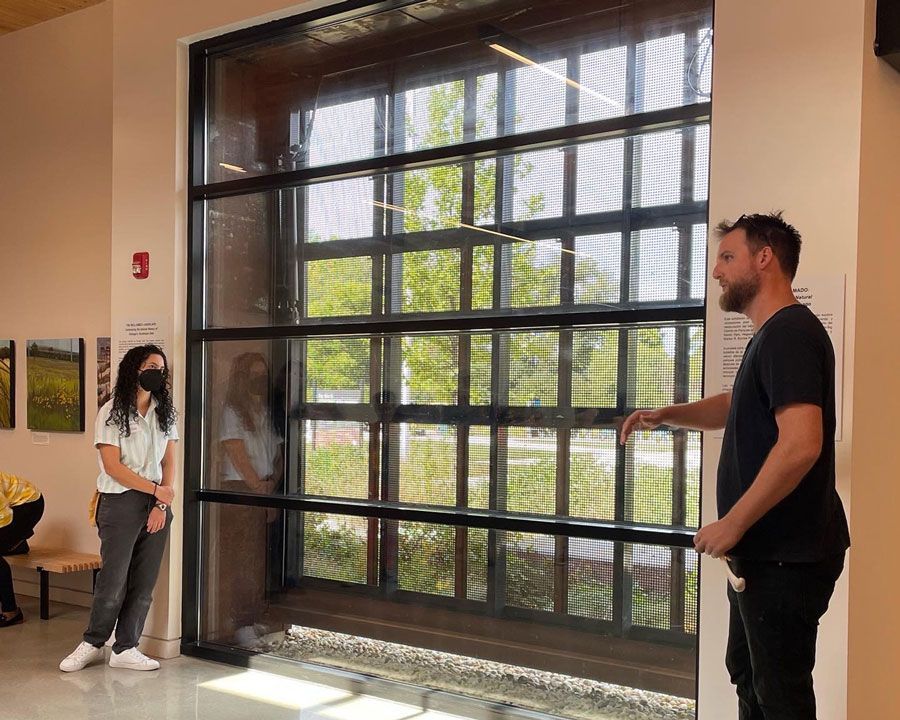
Given the marsh’s importance to migrating birds, it was essential that the building be bird friendly. This was made possible through operable hangar doors that shade the 10-by-10-foot windows when raised over them. When raised like this, the doors limit the chance of birds to mistake reflections in the windows for the landscape.
Even when closed, the doors’ perforated metal allows 50% of daylight to enter the space.
Why is the environmental center important to the surrounding community?
The project centers local ecology, but also, importantly, the surrounding neighborhoods that have historically been burdened by pollution caused by steel mills and other industries. “As you walk through the exhibit you see photographs of some of the people that live in the surrounding communities, and their stories are reflected in that exhibition,” said Joe Valerio, Principal at Valerio Dewalt Train.