Chicago to Introduce Clean and Affordable Buildings Ordinance
CHICAGO – Today, at a press conference at City Hall, Alderwoman Maria Hadden of Chicago’s 49th ward announced that Mayor Brandon Johnson will be introducing an ordinance at Wednesday's City Council meeting to set decarbonization measures for all newly constructed or majorly renovated buildings.
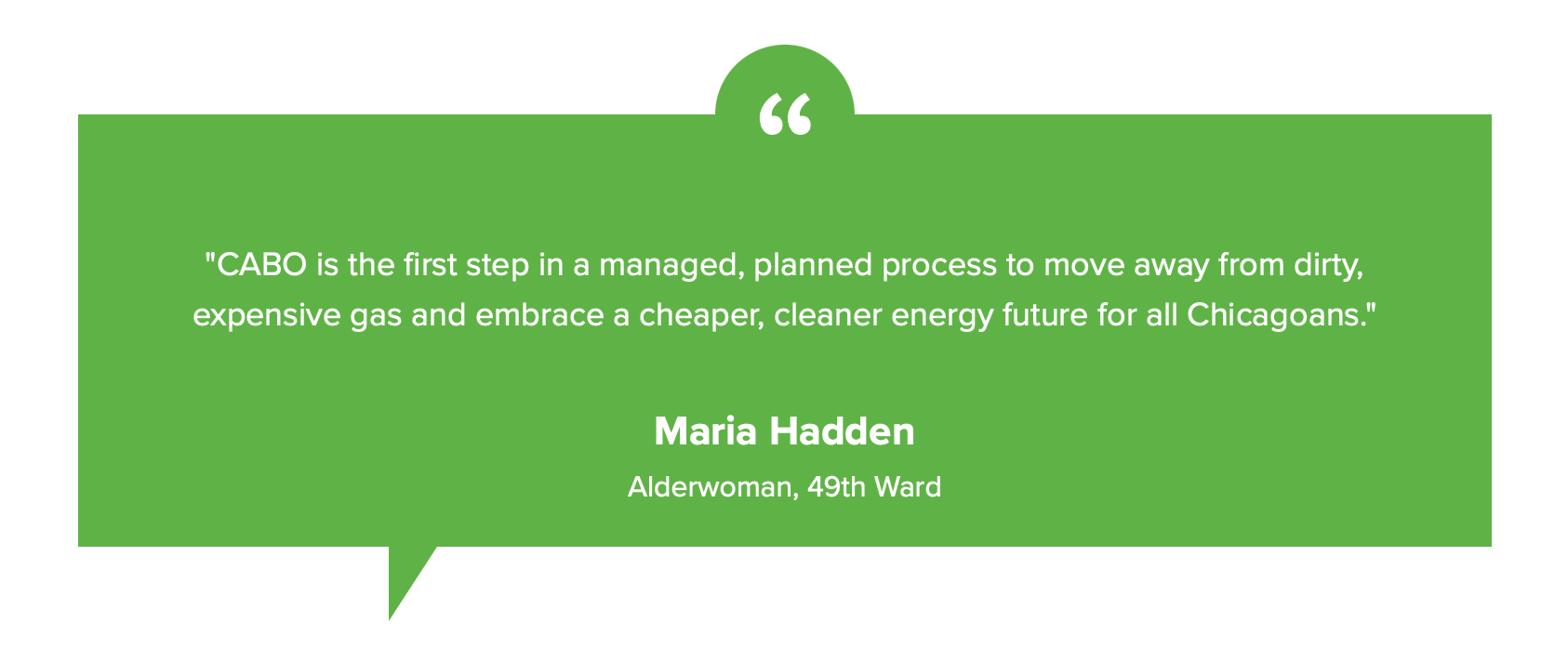
"Too many Chicagoans are having trouble paying their gas bills, and too many families are exposed to chemicals that cause cancer and asthma when burning gas in their kitchens. That is why we are taking the first step towards making how we heat our homes more affordable and making indoor air safer for every Chicagoan," said Mayor Johnson in a statement about the ordinance.
The Clean and Affordable Buildings Ordinance (CABO) would eliminate harmful natural gas emissions by setting an indoor emissions limit banning the combustion of fuels that emit more than 25 kg/btu – effectively requiring all new construction to switch to clean power sources like electric or other high efficiency systems. The proposed ordinance would provide exceptions to specific systems including for commercial cooking, emergency backups, and more.
The introduction of the Clean and Affordable Buildings Ordinance stems from the 2023 Chicago Building Decarbonization Working Group Recommendations Report, the work of 53 technical experts, civic leaders, and community stakeholders across the city. It is also the culmination of years of grassroots advocacy work from members of the Illinois Clean Jobs Coalition.
Addressing the climate impacts of Chicago’s built environment is vital towards meeting the city’s climate targets, as 68% of the City’s greenhouse gas emissions come from the buildings sector compared to 22% across the state and 29% nationwide. This ordinance takes the much needed first step in ensuring that new construction does not exacerbate this impact.
While the push for increased electric use has raised questions around grid capacity, research into long-term grid reliability finds that Chicago’s is among the lowest risk in the nation. Furthermore, COMED has been researching scenarios to meet increased demand, while also achieving the goal of 100% renewable energy by 2050.
A recent report by E2 found that 12,000 Chicagoans work in clean energy, more than double the number of fossil fuel workers. Passing CABO and electrifying new construction in Chicago would expand the opportunities for the electricians, HVAC installers, geothermal technicians, and workers graduating from the two clean job training centers coming soon on Chicago’s West and Southwest sides.
Switching away from gas and adopting electric systems would also save homeowners in Chicago a significant amount of money. A study by NRDC shows that the average Chicago homeowner would save up to $20,000 over twenty years by fully electrifying their home.
Investing in clean buildings is also an investment in public health. Gas-burning stoves are linked to over 21% of childhood asthma cases in the state. Other pollutants from natural gas are linked to elevated risk of cancers like leukemia.
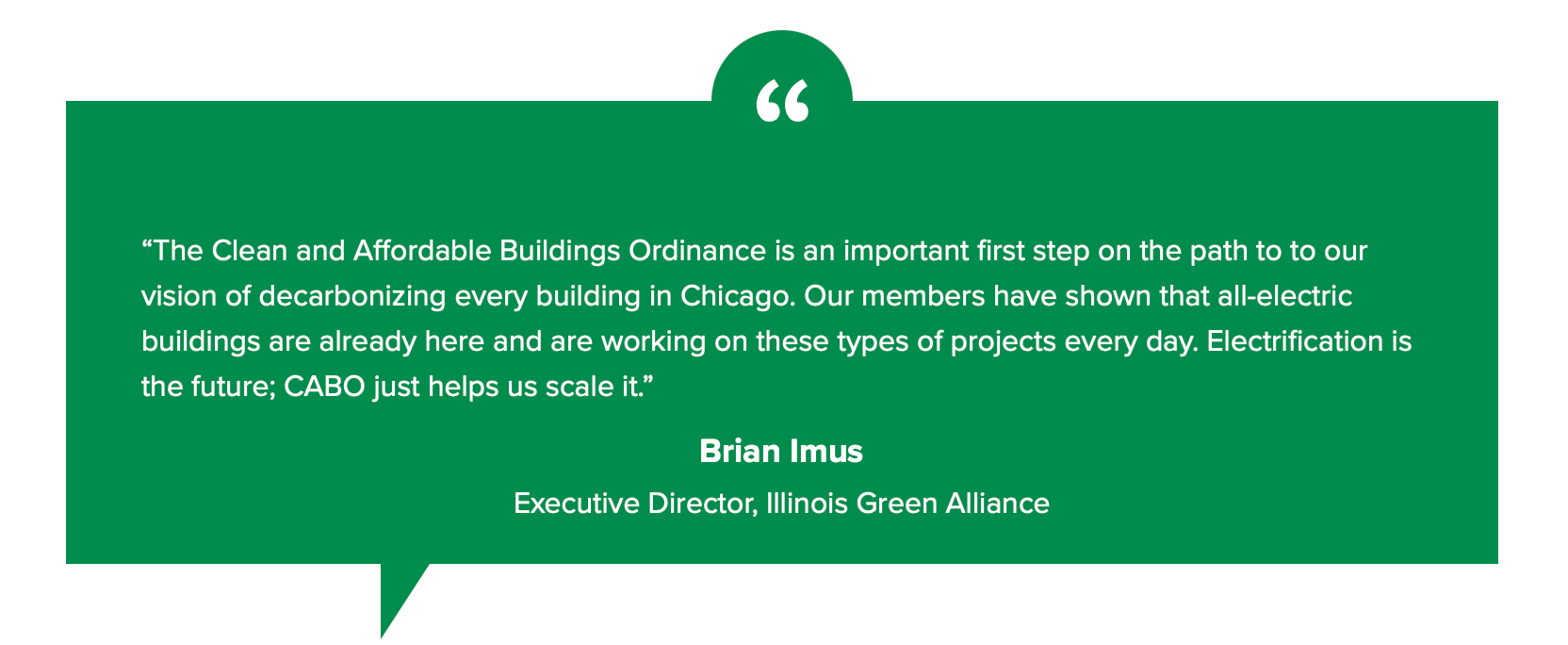
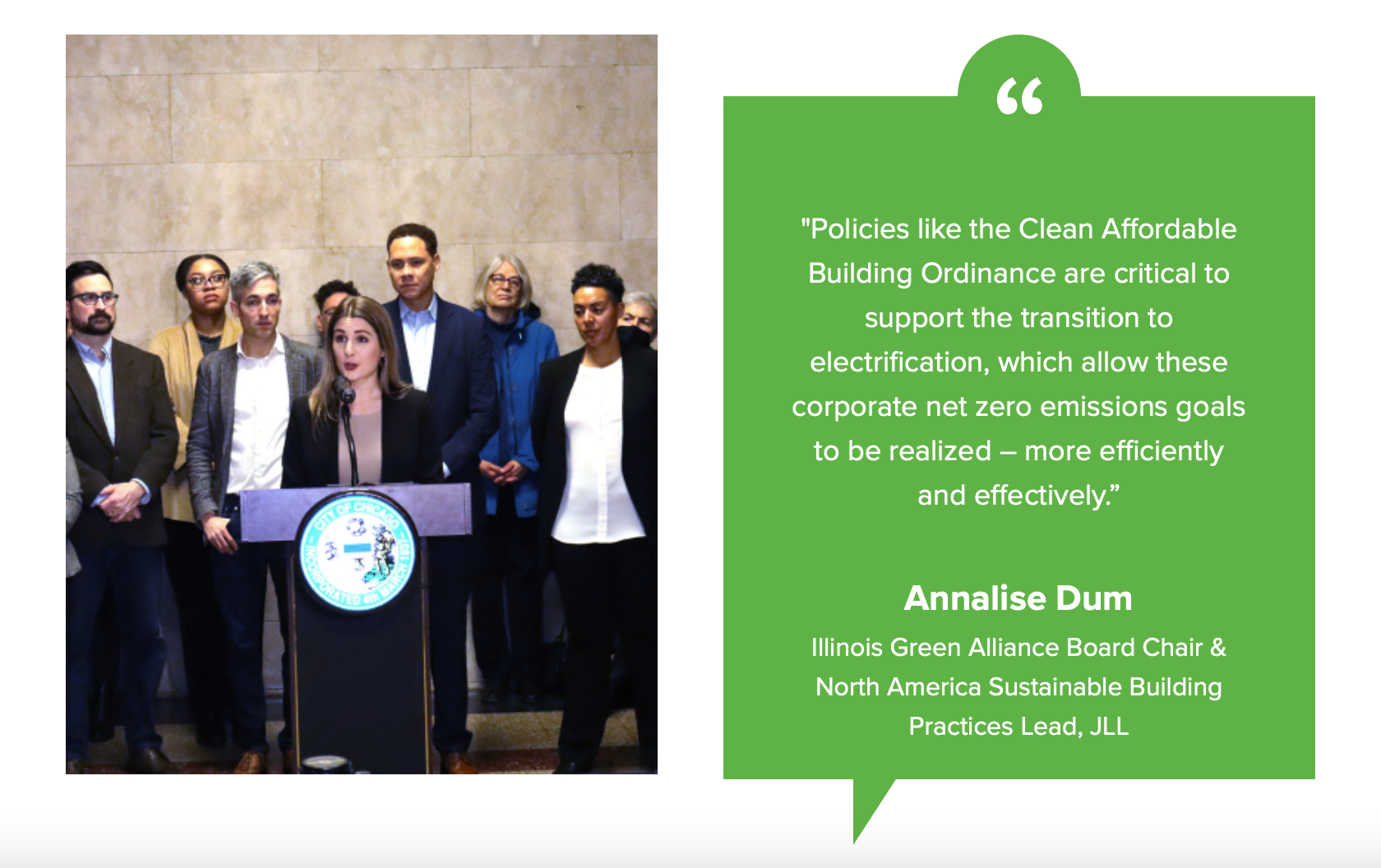
Illinois Green Alliance commends this initiative towards making Chicago a leader in building decarbonization. This ordinance represents a crucial first step towards that goal. CABO aligns the Chicago with other cities across the nation and state who have taken bold steps for human health and the future of our built environment including New York City and the Village of Oak Park. We strongly urge Mayor Brandon Johnson and Chicago City Council to advance the city’s carbon reduction goal, protect the health of its residents, and support the electrification workforce by passing the Clean and Affordable Buildings Ordinance.
###
Illinois Green Alliance is a nonprofit, mission driven organization working to advance green buildings and sustainable communities for all. Driven by members from within the building industry, we advance our mission through education, policy, and community outreach. Learn more at www.illinoisgreenalliance.org